

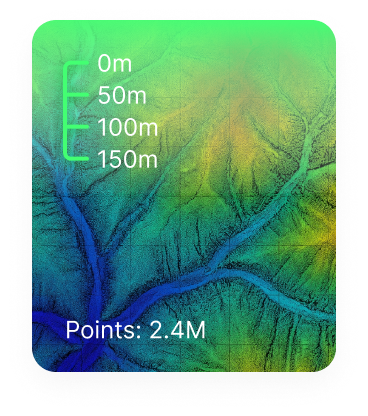
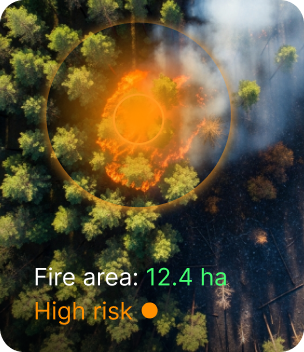
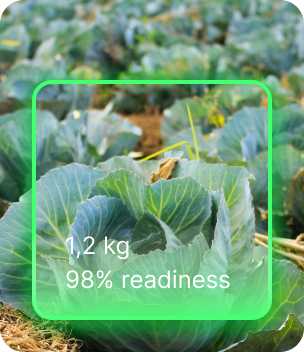


We read patents and technical documents, then translate them into plain language. Each use case shows:
Patent-Based Library of AI Use Cases
Real examples of how AI is used in practice. Based on patents and technical documents from industries like forestry, mining, construction, and many other industries.
Browse use casesWhat You'll Find Here
See real AI applications
Browse examples by industry, task, or algorithm type. See what data is used, how problems are solved, and where different methods work best.
Find vendors to implement AI
Most use cases include links to companies and solutions that can help you implement similar AI applications.
How It Works
The real problem being solved
What practical challenge the AI addresses in real-world scenarios.
What data is used
Input formats, sources, and data requirements for the solution.
Which AI approach is applied
The algorithm family and method used without marketing jargon.
Known limitations
Constraints and boundaries of the approach based on technical documentation.
Browse by AI Method
Object Detection
Identify and locate objects for monitoring, tracking, and automated analysis.
Image Segmentation
Isolate regions and boundaries for measurement, inspection, and automation.
Depth Estimation
Estimate distance and geometry for mapping, navigation, and spatial awareness.
Image Classification
Recognize and sort images for QA, identification, and large-scale analysis.
Video Classification
Classify video content for behavior understanding and automated processing.
Video Object Detection
Detect and track objects over time for temporal and real-time monitoring.
Who Uses This

Companies exploring AI
See what's actually possible before talking to vendors.

Engineers & data scientists
Review real implementations in your field and related industries.

Solution providers
Compare your approach with documented real-world examples.
Vendors and Real Implementations
Each use case includes links to vendors or firms that appear to address similar tasks, based on public information. These links are intended as starting points for further research rather than as endorsements.
In some instances, the library references a specific real-world implementation (for example: drone-based mapping, image annotation services, or an SAP field application) to suggest a concrete pathway to investigate further.
These links are provided for practical context. Because the list is not exhaustive, you can request updates to help keep the information factual and clear.
Methodology and Limitations
Our methodology page explains how patent and technical-document inputs are filtered, interpreted, and transformed into structured use-case pages.
It also outlines limitations, including where patent text can be ambiguous and where real-world execution details are outside the source material.